
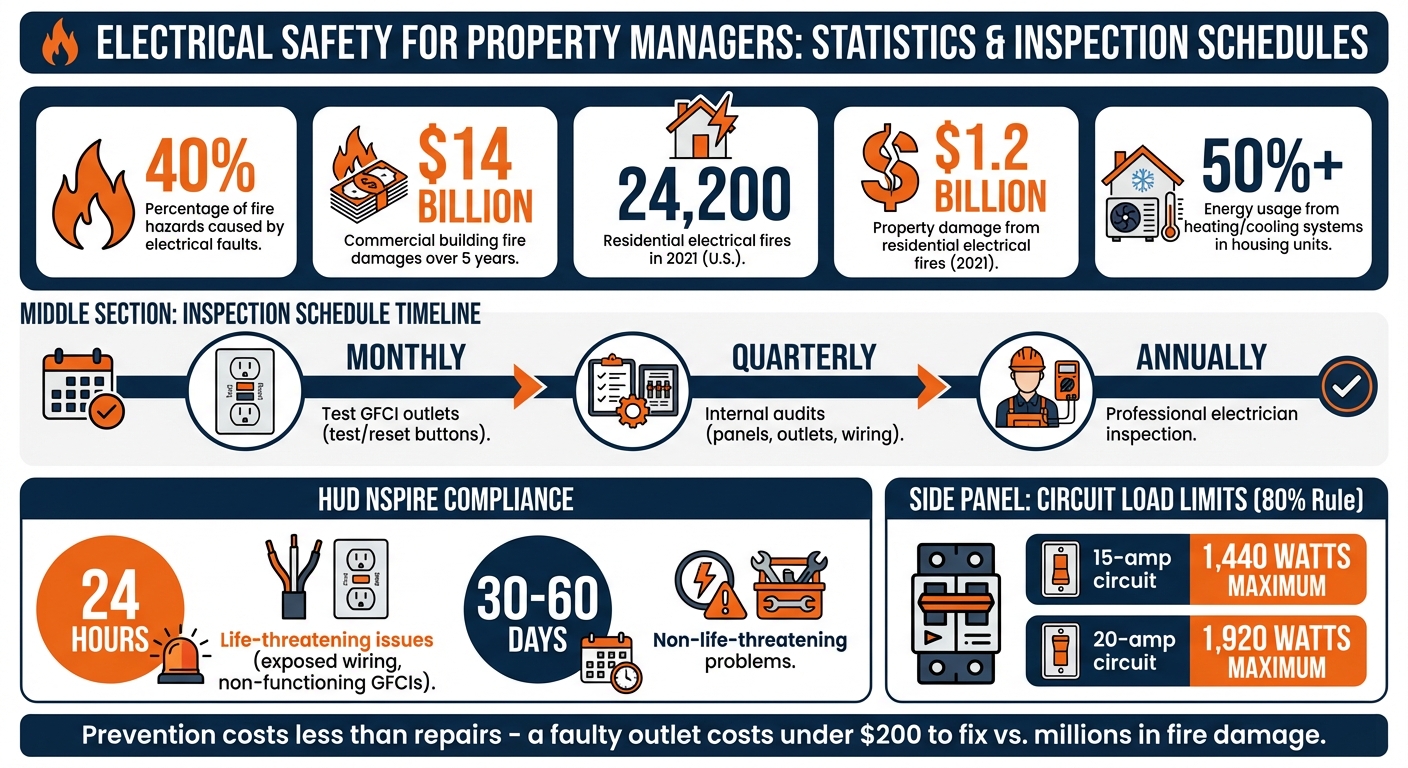
Electrical safety is non-negotiable – it protects lives, prevents property damage, and avoids costly legal issues. Fires caused by electrical faults account for 40% of fire hazards, with commercial building fires leading to $14 billion in damages over five years. For property managers, maintaining safe systems is a key responsibility. Here’s what you need to know:
- Regular Inspections: Test GFCI outlets monthly, conduct quarterly audits, and schedule annual professional reviews to catch issues early.
- Prevent Circuit Overloads: Map circuits, follow the 80% load rule, and upgrade outdated panels to handle modern demands.
- Install Safety Devices: Use GFCIs, AFCIs, and surge protectors to minimize risks in moisture-prone and high-demand areas.
- Create an Electrical Safety Program: Develop a structured plan for inspections, testing, and maintenance tailored to your property.
- Emergency Preparedness: Label panels, train staff, and establish clear protocols to handle power failures or electrical hazards.
Why it matters: Staying compliant with HUD’s NSPIRE standards, addressing life-threatening issues within 24 hours, and maintaining detailed records are essential for liability protection and tenant safety. Proactive measures not only reduce risks but also save money by avoiding expensive repairs or disruptions. Start today by scheduling an inspection and reviewing your safety protocols.
Electrical Safety Hazards in Commercial Buildings Explained
sbb-itb-c0ea5e9
1. Schedule Regular Electrical Inspections
A well-planned schedule – including monthly GFCI testing, quarterly internal audits, and annual professional inspections – can identify electrical issues early, from minor outlet problems to hidden wiring defects.
Actionability
To establish an effective inspection routine, follow these steps: Test GFCI outlets monthly by pressing the ‘test’ and ‘reset’ buttons to ensure they function properly. Conduct quarterly internal audits by walking through the property with a checklist that includes electrical panels, outlet covers, and visible wiring. Finally, arrange for a licensed electrician to perform an annual inspection. This professional review should evaluate key areas such as electrical panels, grounding systems, and load capacity.
Impact
Regular inspections reduce the risk of electrical failures that could result in fires or injuries. Monitoring energy spikes, especially around HVAC systems or EV charging stations, can help pinpoint equipment issues before they escalate. Annual professional reviews often uncover outdated systems, like Federal Pacific panels or aging fuse boxes, which may not meet modern electrical demands and could require timely upgrades.
Compliance
For HUD-regulated properties, regular inspections are mandatory. Under NSPIRE standards, life-threatening electrical issues – such as exposed wiring or non-functioning GFCIs in moisture-prone areas – must be addressed within 24 hours. Non-life-threatening problems typically require resolution within 30 to 60 days. Maintaining detailed records of inspections, repairs, and tests is essential for HUD verification and liability protection. Many property managers also schedule professional pre-inspections before official HUD visits to identify and fix common issues like cracked outlet covers or missing GFCI protection. These practices strengthen your overall electrical safety strategy.
Relevance
Commercial and multifamily properties face unique electrical challenges. Heating and cooling systems alone can account for over 50% of energy usage, placing significant strain on electrical loads. With shared systems and multiple tenants, potential risk points increase. Equip your maintenance staff with UL-approved outlet testers to verify wiring, grounding, and polarity, as these tools provide a more accurate assessment than visual checks. Additionally, installing Surge Protection Devices (SPD) at key points can protect sensitive electronics and reduce fire risks caused by voltage spikes. By sticking to a thorough inspection plan, you can enhance electrical safety and safeguard tenants, minimizing risks throughout your property.
2. Prevent Circuit Overloads
Circuit overloads happen when the electrical demand on a circuit surpasses its safe limit. This issue is especially common in commercial and multifamily properties, where tenants might use multiple high-power appliances – like space heaters, coffee makers, or printers – on the same circuit. Outdated electrical panels can also struggle to handle the demands of modern devices, increasing the risk.
Actionability
Work with a licensed electrician to create a circuit map that identifies each outlet’s load and flags unusual pairings (e.g., a microwave sharing a circuit with hallway lights). Follow the 80% rule: limit a 15-amp circuit to 1,440 watts and a 20-amp circuit to 1,920 watts. Train your maintenance team and educate tenants to recognize warning signs, such as flickering lights, buzzing noises, warm outlet covers, or frequent breaker trips. Avoid permanent use of extension cords, and make sure high-demand appliances like refrigerators and air conditioners have their own dedicated circuits. These steps can greatly minimize the risk of overloads and enhance safety.
Impact
Taking steps to prevent circuit overloads reduces fire hazards and improves tenant safety. Using load monitoring systems provides real-time data, helping you spot and address overused circuits before they become a problem. As Mitch Ricketts, a Certified Safety Professional, explains:
“Fires can still happen if those safety devices are improperly sized, defective, or delayed in operation”.
— Mitch Ricketts, Certified Safety Professional
Heating and cooling systems alone can account for over 50% of energy consumption in housing units, putting extra pressure on circuits during peak seasons.
Relevance
Managing electrical systems in commercial and multifamily properties comes with unique challenges. Shared electrical infrastructure means an overload in one unit could disrupt neighboring units as well. The addition of EV charging stations, which often pull 30+ amps, and smart building technologies further strain older panels, typically rated at 100 or 200 amps. Upgrading to a smart electrical panel, which costs between $2,000 and $5,000, can provide active load management. These panels can prioritize essential circuits and delay high-demand activities, like EV charging, to off-peak hours. For properties with older fuse panels, switching to modern circuit breakers or installing Type “S” tamper-proof fuses can prevent the dangerous practice of using oversized fuses. Modernizing your electrical systems ensures better safety and reliability for tenants.
Compliance
HUD’s NSPIRE standards mandate that life-threatening electrical issues be resolved within 24 hours. Keeping detailed circuit maps and accurate load calculations shows proactive management during inspections. Additionally, documenting panel upgrades or circuit changes not only protects you from liability but also confirms compliance with the National Electrical Code, which requires dedicated circuits for kitchens and other high-demand areas.
3. Install and Maintain Safety Devices
Safety devices play a crucial role in minimizing electrical hazards. For instance, Ground Fault Circuit Interrupters (GFCIs) are designed to prevent electrical shocks in areas prone to moisture, such as kitchens, bathrooms, laundry rooms, and outdoor spaces. Similarly, Arc Fault Circuit Interrupters (AFCIs) reduce the risk of fires caused by electrical arcing in living spaces. Surge protectors installed at main electrical panels shield sensitive electronics from sudden voltage spikes, while hardwired smoke and carbon monoxide detectors with battery backups provide early warnings.
Actionability
To keep safety devices functioning properly, regular testing and maintenance are essential:
- Test GFCI outlets monthly by pressing the “test” button to ensure they trip as expected.
- Use a UL-approved outlet tester to confirm proper wiring, grounding, and polarity, as visual checks alone may miss issues.
- Replace smoke detector batteries during unit inspections or tenant turnovers. Remember, smoke detectors should be entirely replaced every 10 years.
- Schedule an annual inspection by a licensed electrician to uncover hidden wiring faults or grounding problems.
Impact
Eli Secor, Co-Founder of Landlord Gurus, highlights the importance of electrical safety:
“We believe electrical issues pose the greatest health and safety risks in rental properties”.
Properly maintained GFCIs and AFCIs can prevent tenant injuries, property damage, and expensive liability claims by reducing the likelihood of shocks and electrical fires.
Compliance
HUD’s NSPIRE standards mandate that life-threatening electrical issues – like malfunctioning GFCIs in required locations or exposed wiring – must be addressed within 24 hours of discovery. The Inspection Group explains:
“Under NSPIRE, current safety standards apply – older units are not ‘grandfathered’ in regarding electrical safety”.
To stay compliant, maintain detailed records of all tests, repairs, and replacements. Additionally, consult licensed electricians about replacing outdated electrical panels from manufacturers like Zinsco, Federal Pacific, or Edison, which are known fire hazards. For a more proactive approach, consider implementing a formal electrical safety program across your properties.
4. Create an Electrical Safety Program
A well-crafted Electrical Maintenance Program (EMP) brings structure to managing electrical safety by tailoring tasks to the specific needs of your property. The National Fire Protection Association (NFPA) emphasizes the importance of creating an EMP that includes detailed schedules for inspections, testing protocols, and maintenance tasks. With electrical issues accounting for 40% of fire hazards, having an EMP isn’t just helpful – it’s essential. By integrating the EMP into your regular inspection routines, you can make safety and compliance efforts more efficient.
Actionability
Start by conducting quarterly self-audits using HUD’s NSPIRE Inspection Job Aid to examine electrical panels, outlets, and fixtures. Move beyond fixed schedules and adopt condition-based maintenance, leveraging tools like infrared thermography to identify potential problems early. For more advanced tasks, such as load calculations or panel upgrades, collaborate with licensed commercial electricians. Meanwhile, your team can handle routine testing and record-keeping. This approach not only minimizes risks but also ensures smoother day-to-day operations.
Impact
Implementing an EMP significantly reduces fire risks, prevents costly downtime, and lowers legal liabilities. Ana Matos from Kennedy Electric highlights the importance of this approach:
“A proactive approach to electrical safety prevents accidents and verifies the smooth operation of business activities”.
— Ana Matos, Kennedy Electric
This strategy is becoming even more important as multifamily properties incorporate features like EV charging stations and heat pumps, which increase the strain on electrical systems.
Compliance
A formal EMP builds on your existing safety inspections, strengthening compliance and risk management efforts. Adhering to NFPA 70B standards ensures alignment with local codes, HUD requirements, and national guidelines. Maintain clear and concise records of inspections and repairs to simplify compliance processes. Under NSPIRE standards, any life-threatening electrical issues must be addressed within 24 hours.
5. Prepare Emergency Response Procedures
Electrical emergencies can happen even with the best preventive measures in place. Having a clear and actionable emergency response plan ensures that your staff and tenants know exactly how to respond when power fails or circuits malfunction. Your plan should focus on three key areas: safely evacuating the building, shutting off main power sources, and contacting emergency services. Nick Thornton, Head of Operational Resilience for Global Banking at J.P. Morgan, highlights the importance of preparation:
“You can’t practice in the middle of an incident”.
— Nick Thornton, Head of Operational Resilience for Global Banking at J.P. Morgan
Actionability
Start by labeling all electrical panels, circuits, and outlets, and place detailed instructions in areas with high voltage. Create a priority system to differentiate between emergencies – like sparks, burning smells, or full building outages – and less critical issues, such as blown fuses or partial power loss. Keep a vetted list of licensed commercial electricians who can respond to emergencies within two hours, backed by Service Level Agreements. Regularly test your notification systems, including call trees and alerts, to ensure you can reach all staff and tenants, even during communication disruptions. These steps provide a solid foundation for managing electrical emergencies effectively.
Impact
A well-prepared emergency response plan can save lives and protect property. Quick, decisive action can stop minor issues from escalating into major disasters. Investing in preparedness pays off – every dollar spent can significantly reduce potential losses. Regular drills help minimize panic and confusion during real emergencies, while robust communication systems ensure timely updates via SMS, email, or tenant portals. For multifamily properties, consider the impact of power outages on smart building systems and residents working from home. Prioritizing internet access alongside essential utilities like water, heat, and electricity has become increasingly crucial.
Compliance
Your emergency plan should be treated as a living document that adapts to changes in your property. Update contact lists and procedures regularly to account for new staff, building systems, or local risks. Under HUD’s NSPIRE standards, life-threatening electrical issues must be addressed within 24 hours. Train your staff to document incidents with timestamped photos and vendor estimates, as insurance claims often need to be filed within 30 days. After both drills and real emergencies, conduct post-incident reviews to identify areas for improvement and refine your procedures. By integrating these steps into your overall electrical safety program, you’ll create a more comprehensive and effective approach to emergency management.
Conclusion
Electrical safety isn’t something you can check off once and forget – it’s an ongoing responsibility that protects lives, preserves property, and keeps operations running smoothly. To put things into perspective, in 2021, U.S. fire departments responded to about 24,200 residential electrical fires, causing $1.2 billion in property damage. With nearly 40% of fire hazards linked to electrical issues, consistent safety measures are crucial to avoiding potentially devastating outcomes.
The good news? Most electrical disasters are entirely preventable. Regular inspections and routine testing are key to staying compliant with regulations like HUD’s NSPIRE standards while ensuring tenant safety. These steps not only fulfill legal requirements but also show your dedication to tenant well-being and help safeguard your property from costly damage. Staying proactive in maintenance also keeps your property appealing and aligned with modern expectations.
It’s also important to educate both maintenance teams and tenants. Encourage them to report any unusual signs immediately – whether it’s flickering lights or a warm outlet. By fostering a culture where everyone plays a role in electrical safety, you can catch small issues before they turn into major problems.
From a financial standpoint, proactive maintenance is a no-brainer. Fixing a faulty outlet might cost under $200, but fire damage can easily run into millions. Regular upkeep not only reduces the risk of expensive emergency repairs but also helps avoid unplanned downtime. Plus, well-maintained electrical systems run more efficiently, cutting energy costs and even reducing your environmental impact. Every dollar spent on prevention is a dollar saved – or even multiplied – in avoided losses and smoother operations.
Take action today to strengthen your electrical safety measures. Schedule a professional inspection, test your GFCI outlets, and review your emergency response plan. By prioritizing electrical safety, you’re protecting your tenants, your property, and your financial future. It’s a commitment that pays off in every way.
FAQs
What are the essential steps for creating an effective electrical safety program for property managers?
An effective electrical safety program for property managers revolves around regular maintenance, strict adherence to safety standards, and ongoing education. Start by scheduling frequent inspections to spot potential risks like faulty wiring, overloaded circuits, or aging electrical systems. Collaborate with licensed electricians for thorough evaluations and upgrade outdated infrastructure as needed to align with current safety requirements.
Stay compliant with important regulations, such as the National Electrical Code (NEC) and guidelines like NFPA 70B, which provide detailed practices for maintaining safe electrical systems. Educate tenants and staff on essential electrical safety tips, ensure electrical panels remain accessible and unobstructed, and maintain detailed records of all inspections and repairs for accountability and transparency.
By prioritizing consistent maintenance, following established safety codes, and fostering awareness, property managers can effectively minimize electrical risks and create a safer environment for everyone involved.
What steps can property managers take to prevent circuit overloads in multifamily properties?
Property managers can avoid circuit overloads by distributing high-power appliances across different circuits to evenly spread the electrical load. Scheduling regular electrical inspections is another key step, as these checks can uncover potential problems early, allowing them to be fixed before they escalate into serious hazards. Upgrading outdated wiring and electrical panels is also a smart move to handle the demands of modern appliances and reduce overload risks.
Taking a proactive approach to managing the electrical system doesn’t just improve tenant safety – it also cuts down on expensive repairs and limits disruptions caused by power outages.
How can property managers prepare for electrical emergencies in commercial buildings?
Property managers can take several steps to ensure safety and reduce risks during electrical emergencies. Start by identifying critical systems – like security systems or refrigeration units – that must remain operational during a power outage. To keep these systems running, plan for reliable backup power options, such as generators or battery systems.
Routine inspections and maintenance by licensed electricians are essential for spotting issues like faulty wiring or overloaded circuits before they become serious hazards. If your building has an older electrical system, consider upgrading it to meet current safety standards. Adding surge protection and ensuring proper use of extension cords are also simple but effective ways to prevent accidents.
It’s also important to establish a clear emergency response plan. Train staff on electrical safety procedures and ensure emergency systems – like fire alarms and surge protectors – are in good working order through regular testing. These measures not only protect tenants but also help minimize downtime and safeguard your property when unexpected electrical problems arise.
Related Blog Posts