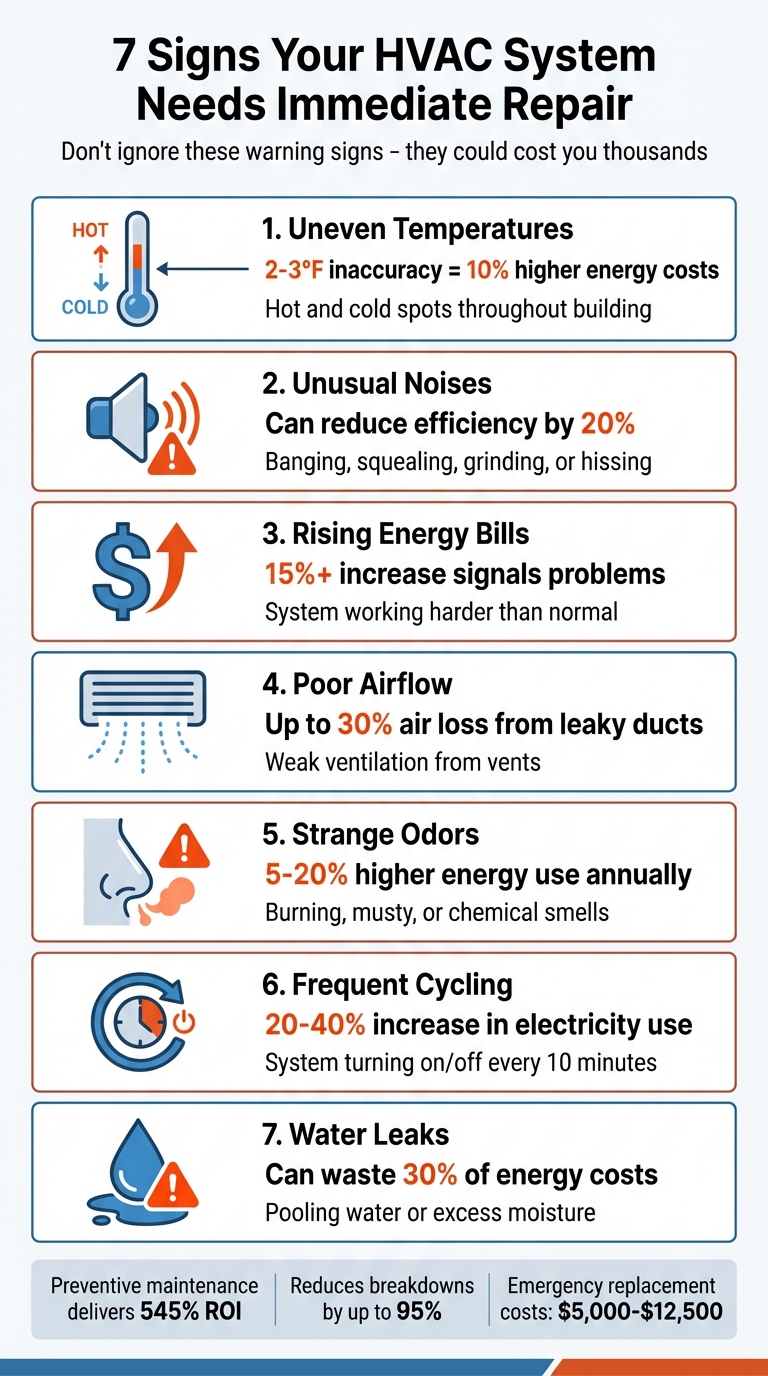
Your HVAC system is crucial to maintaining comfort and air quality. Ignoring warning signs can lead to higher energy bills, expensive repairs, or even complete system failure. Here are seven key signs your HVAC system may need urgent attention:
- Uneven Temperatures: Hot and cold spots indicate system inefficiency or issues like clogged ducts or refrigerant leaks.
- Strange Noises: Banging, squealing, or hissing sounds often signal mechanical or electrical problems.
- Rising Energy Bills: A sudden spike might mean your system is overworking due to dirty filters, aging parts, or leaks.
- Weak Airflow: Poor ventilation can strain your system, worsen air quality, and increase costs.
- Unusual Odors: Burning, musty, or chemical smells could point to mold, electrical issues, or refrigerant leaks.
- Frequent Cycling: Short on-off cycles waste energy and cause wear on components.
- Water Leaks: Pooling water or excess moisture may indicate clogged drains or frozen coils.
Acting quickly can prevent minor issues from escalating into costly emergencies. Regular maintenance can save you money, extend the life of your system, and ensure consistent comfort.
Warning Signs Your AC Needs REPAIR
1. Uneven Temperatures Throughout the Building
When some rooms feel unbearably hot while others feel like an icebox, it’s a clear sign your HVAC system is struggling. This imbalance forces the system to work overtime, constantly trying to catch up in areas that lag behind.
Impact on System Efficiency
Temperature inconsistencies don’t just make occupants uncomfortable – they also hit your energy bills hard. For instance, even a slight thermostat inaccuracy of 2–3°F in a large building can increase heating or cooling costs by as much as 10%. On top of that, short cycling – when the system turns on and off more frequently than it should – wastes energy and puts unnecessary strain on key components. Problems like refrigerant leaks, failing compressors, or clogged ductwork can make the imbalance worse, leading to a 5% to 20% hike in energy consumption annually. Considering that commercial buildings already dedicate around 15% of their electricity to cooling and 16% to ventilation, even small inefficiencies can result in hefty operating costs. And let’s not forget – these inefficiencies can also lead to health concerns for occupants.
Potential Health or Safety Risks
Uneven temperatures often signal humidity problems, which can pose risks to health. High humidity can encourage mold and mildew growth inside ductwork or on surfaces, while overly dry air can cause cracked skin, nasal irritation, and respiratory discomfort. Poor air circulation caused by these temperature swings can also degrade indoor air quality, worsening allergies and respiratory issues. On top of health concerns, these conditions can lead to expensive repairs down the line.
Cost Implications of Delayed Repair
Ignoring temperature imbalances can quickly turn minor issues into major financial headaches. Small problems left unchecked often lead to significant mechanical failures or even require a complete system replacement. Components like the blower motor and compressor face extra strain, resulting in premature wear. Proactive maintenance can prevent these emergencies, delivering a return on investment of up to 545%. On the other hand, emergency repairs are not only more expensive but also highly disruptive. Instead of constantly adjusting the thermostat to compensate, it’s smarter to inspect for blocked vents, dirty filters, or broken dampers.
2. Unusual Noises or Vibrations
Your HVAC system is designed to work quietly, so any unusual sounds – like banging, grinding, squealing, or hissing – are clear signs that something is wrong. Different noises point to specific issues. For example, a squealing noise often means a worn fan belt or failing motor bearings. Grinding sounds, on the other hand, suggest motor bearing failure that needs immediate attention. Hissing could indicate a refrigerant leak, while buzzing or clicking noises often signal electrical problems like a failing capacitor or loose wiring. These sounds not only highlight mechanical problems but can also lower your system’s efficiency.
Impact on System Efficiency
Strange noises usually mean your HVAC system is under strain, which can reduce its efficiency by as much as 20%. Hissing sounds, often caused by leaky ductwork, can waste up to 30% of conditioned air before it even reaches your home. Meanwhile, grinding or squealing noises show that parts are working against each other, leading to higher energy bills and diminished performance.
Potential Health or Safety Risks
Some noises go beyond mechanical issues and pose safety risks. Buzzing or clicking sounds from electrical components could mean loose wiring or arcing contactors, which are potential fire hazards. Refrigerant leaks, often accompanied by hissing, can harm indoor air quality and even pose health risks to those inside the home. A loud boom during ignition might signal a dangerous gas ignition issue.
Cost Implications of Delayed Repair
Ignoring these warning sounds can lead to costly consequences. A minor issue like a worn fan belt or loose part, which might cost between $150 and $600 to fix, can escalate into a $2,000+ repair if it causes a compressor to seize or a motor to burn out. Over time, vibrations or grinding can turn a small fix into a complete system replacement. A good rule of thumb: multiply your system’s age by the repair estimate. If the total exceeds $5,000, replacing the unit might be more economical.
3. Rising Energy Bills
Seeing your energy bills jump – especially by 15% or more – can be a clear sign that your HVAC system is struggling. When parts like dirty coils, aging motors, or clogged air filters start to fail, the system works harder than it should, wasting electricity and driving up costs. This inefficiency doesn’t just hit your wallet – it also reflects wasted energy.
Impact on System Efficiency
When air filters are dirty or ducts are clogged, your HVAC system has to work overtime just to keep up. This can lead to up to 30% of conditioned air escaping before it even reaches your space. The motor ends up overworking, especially during frequent startups, which burn more electricity. If your system starts short cycling (turning on and off rapidly), the problem only gets worse. For commercial buildings, where cooling makes up 15% and ventilation 16% of electricity use, these inefficiencies can quickly add up to significant costs.
Cost Implications of Delayed Repair
Letting these inefficiencies go unchecked can lead to bigger problems. Rising energy bills often signal underlying issues that, if ignored, can cause a “run-to-fail” scenario. This means parts break down completely, leading to emergency repairs or even a full system replacement.
“Deferred maintenance can lead to catastrophic failures, long lead times on parts, and unhappy building occupants.”
— ABM
Delaying maintenance can increase energy usage by 5–20% annually, which could cost you hundreds or even thousands of dollars.
Just like unusual noises can hint at mechanical problems, rising energy bills are a financial red flag for HVAC inefficiencies. Compare your current utility bills to the same months last year. If you notice a steady increase that can’t be explained by weather changes, it’s time for a professional inspection. Catching these problems early can save you from turning a $150–$450 repair into a $1,200–$2,500+ compressor replacement. Keeping an eye on your energy bills can help you tackle issues before they spiral into costly emergencies.
4. Poor Airflow from Vents
Noticing weak airflow from your vents isn’t just about comfort – it’s often a sign that your HVAC system is struggling. This can lead to higher energy use, uneven temperatures, and even safety risks.
Impact on System Efficiency
When airflow is restricted, your HVAC system has to work overtime to maintain the desired temperature. This extra effort increases wear on its components and drives up energy consumption, leading to higher utility bills. For commercial buildings, where ventilation accounts for about 16% of electricity use, even minor inefficiencies can quickly add up. Poor airflow can also cause short cycling, which wastes energy and may reduce the system’s lifespan, typically expected to last 15 to 20 years. You might also notice hot or cold spots throughout your building, a clear sign of uneven air distribution.
“Proper airflow stands as the cornerstone of an efficient HVAC system, ensuring the effective operation of all components.”
— Acosta Heating, Cooling & Electrical
Potential Health or Safety Risks
Limited airflow can compromise ventilation, allowing dust, allergens, and other pollutants to build up. Stagnant air also raises humidity levels, sometimes exceeding 60%, which creates the perfect conditions for mold and bacteria to thrive. This can lead to respiratory problems and other health concerns.
“If your allergies get worse inside than out, that’s your air turning against you.”
— Denis David, Membership Concierge, Home Alliance
Poor airflow can also indicate serious safety issues. For example, a burning smell might mean electrical components like wires or the blower motor are overheating, potentially leading to a fire. A rotten egg odor could signal a natural gas leak, while a sweet or chemical scent might point to a refrigerant leak. Any of these situations require immediate professional attention.
Cost Implications of Delayed Repair
Ignoring airflow problems can turn small, inexpensive fixes into costly repairs. For instance, a clogged filter that costs just a few dollars to replace might lead to a blower motor failure, which could cost over $600 to repair. Similarly, leaky ductwork can waste up to 30% of conditioned air, potentially increasing utility bills by 15–30%. If repair costs climb to 50% of the price of a new system – often exceeding $2,000 for major issues – you may need to consider replacing the entire unit.
“Catching and repairing minor issues early helps prevent major breakdowns that could result in the need for a full AC replacement.”
— Sydney Pearson, Service Manager, Kliemann Brothers
Delaying repairs can also void manufacturer warranties, as many require timely maintenance. Regular inspections and monthly filter checks can help catch problems early and keep your system running efficiently.
sbb-itb-c0ea5e9
5. Strange Odors from Vents
Strange odors coming from HVAC vents shouldn’t be ignored. These smells can signal a range of issues, some of which may pose serious risks to health and safety.
Potential Health or Safety Risks
Identifying and addressing unusual odors early can prevent bigger problems down the line. For instance, a rotten egg or sulfur-like smell is one of the most critical warning signs. While natural gas itself is odorless, utility companies add methyl mercaptan to make leaks detectable. If you notice this smell, evacuate the building immediately, and contact 911 or your gas provider from a safe location – gas leaks can result in fires or explosions.
Burning or electrical smells often point to overheating components or wiring issues, which are potential fire hazards. In these cases, turn off your HVAC system immediately and call for emergency repairs. Musty odors are another red flag, often indicating mold or bacteria in the ductwork, cooling coils, or drain pans. This can severely impact indoor air quality. A chemical or vinegar-like smell may mean a refrigerant leak or a clogged filter, both of which could expose occupants to harmful chemicals.
“A burning smell is one of the most alarming odors you can encounter with your HVAC system. This often points to an electrical issue… Ignoring this problem could lead to a fire hazard.”
Beyond health and safety concerns, these issues can also negatively affect your HVAC system’s performance.
Impact on System Efficiency
Problems like dirty coils or clogged filters force your HVAC system to work harder, which means higher energy bills. In fact, poor HVAC maintenance can increase energy usage by 5% to 20% annually. Restricted airflow caused by mold or saturated filters makes it harder for the system to maintain consistent temperatures, leading to wasted energy and rising costs. Left unchecked, these inefficiencies can also result in more expensive repairs over time.
Cost Implications of Delayed Repair
Ignoring strange odors can significantly increase repair expenses. A professional HVAC inspection typically costs between $150 and $500, while air duct cleaning ranges from $270 to $500. However, delaying repairs for issues like electrical overheating or mold growth can lead to larger problems, such as motor failure or even a fire. Replacing an entire HVAC system, for example, can cost anywhere from $5,000 to $12,500. On the other hand, adopting a preventive maintenance plan can reduce breakdowns by up to 95% and provide an estimated ROI of 545%.
6. Frequent Cycling or Short Cycling
When an HVAC system runs in cycles shorter than 10 minutes – rather than the usual 15–20 minutes – it’s experiencing short cycling. This issue can drain your wallet and drastically reduce the lifespan of your equipment.
Impact on System Efficiency
Short cycling keeps your HVAC system stuck in startup mode, consuming extra energy and increasing electricity use by as much as 20–40%. Instead of operating efficiently at a steady state, it constantly restarts, wasting energy.
The mechanical strain is just as concerning. A short-cycling system may turn on and off 30 to 50 times daily, compared to the normal 6 to 8 cycles. This means up to a 400–600% increase in wear and tear from frequent startups. On top of that, this constant on-off operation prevents the system from effectively removing moisture, leaving your indoor air damp and sticky. With such short cycles, less air passes through the filters, reducing air quality and allowing allergens to linger.
“Short cycling is one of the most damaging yet commonly overlooked problems in commercial HVAC systems.”
— R & R Refrigeration & Air Conditioning, Inc.
This energy inefficiency not only drives up your utility bills but also creates additional risks for your system’s performance and durability.
Potential Health or Safety Risks
Short cycling can lead to excessive indoor humidity, which creates the perfect environment for mold growth and airborne allergens. Combined with reduced air circulation, dust, pollen, and other particles build up more quickly, aggravating respiratory issues and allergies among building occupants.
There are also electrical risks. Frequent startups place heavy thermal and electrical stress on critical components like motors, capacitors, and wiring. Overheating can damage parts or even cause wiring insulation to burn, increasing the chance of fire hazards. For gas furnaces, short cycling may point to problems like failing flame sensors or overheating heat exchangers, which can result in improper combustion or dangerous exhaust leaks.
Cost Implications of Delayed Repair
Delaying repairs for short cycling can lead to a cascade of financial consequences. For example, if your monthly HVAC bill is $150, short cycling could add an extra $45 to $75 each month – totaling $540 to $900 annually. Beyond energy costs, the equipment itself suffers. Systems built to last 15–20 years might need replacing in just 8–10 years. Key components like compressors, which should last over a decade, could fail in as little as 4–5 years.
“Systems designed for 15-year lifespans may fail in 5-7 years when subjected to chronic short cycling.”
— The Severn Group
In the long run, the combined cost of wasted energy, frequent repairs, and premature replacements can climb to $10,000–$15,000. Common culprits include oversized systems, frozen evaporator coils, low refrigerant levels, or poorly placed thermostats. To avoid escalating damage and expenses, schedule a professional diagnostic as soon as possible.
7. Water Leaks or Excess Moisture
If you notice water pooling around your HVAC unit or see signs of excess moisture, it’s a clear warning that something’s wrong. Unlike a minor drip, these leaks often indicate frozen evaporator coils, clogged condensate drain lines, or even refrigerant issues – problems that can lead to much larger system failures if left unchecked.
Impact on System Efficiency
When there’s too much moisture, it doesn’t just affect the unit – it impacts how efficiently your HVAC system runs. Excess water can damage insulation and cause airborne particles to clump together, reducing the effectiveness of your filters. This forces the system to work harder, increasing energy usage by 5%–20% annually. Frost on evaporator coils can further restrict airflow, leading to poor cooling and longer operating cycles as the system struggles to maintain the desired temperature.
Potential Health or Safety Risks
Water leaks can create the perfect environment for mold and mildew to thrive, not just within the unit but also in your ductwork. These mold spores can circulate through your home, potentially causing respiratory issues, nasal irritation, and even skin problems for anyone exposed. On top of that, water near electrical components is a serious fire hazard, as it can lead to short circuits or wiring damage. To maintain a comfortable and safe environment, indoor humidity should stay between 30% and 50%. Levels above 60% not only feel uncomfortable but also accelerate mold growth.
“If you notice any of these signs, don’t ignore them. The problem is only going to get worse.”
— Josh Elliott, HVAC Training Technician, Williams Comfort Air
If you spot water pooling or notice a burning smell, shut off your HVAC system immediately and cut the power at the circuit breaker to avoid electrical hazards. These issues go beyond just health and safety – they can quickly become financial headaches.
Cost Implications of Delayed Repair
A clogged condensate drain line might only require a simple cleaning, but ignoring it could lead to a full system replacement, which can cost anywhere from $1,200 to $14,000. Excess moisture can corrode essential components like fan motors, bearings, and copper coils, drastically reducing the lifespan of your HVAC equipment. Additionally, ductwork leaks can waste up to 30% of energy costs, and your system may have to work 50% harder to maintain the desired temperature when ducts aren’t sealed properly.
“The longer an HVAC issue goes without being addressed, the more likely it is that a small problem will turn into a bigger, more expensive one.”
— Maintenance Management
Beyond equipment repairs, water damage can ruin ceilings, flooring, carpeting, and drywall, while mold remediation alone can cost thousands of dollars. To avoid these costly outcomes, schedule professional HVAC maintenance in the spring and fall. Catching hidden leaks early can save you from dealing with expensive emergencies later on.
Why You Should Act Now with J National
Small problems like temperature fluctuations or strange noises in your HVAC system can quickly escalate into major issues. Ignoring these warning signs often results in costly repairs or even complete system failures. For instance, something as simple as a loose electrical connection or a dirty coil can snowball into a failed compressor or motor, potentially requiring a full system replacement. In commercial or multifamily properties, such breakdowns can halt operations entirely, creating significant disruptions.
The financial impact of neglecting HVAC maintenance extends far beyond repair bills. While a “run-to-fail” strategy might seem cheaper upfront, it often leads to catastrophic failures, long waits for replacement parts, and dissatisfied tenants or building occupants. Even a small thermostat inaccuracy of 2°F to 3°F in a large property can increase heating or cooling costs by 10%. And the risks don’t stop there – issues like mold from water leaks, carbon monoxide from gas leaks, and poor air quality can pose serious health hazards.
Acting quickly is essential. J National provides 24/7 emergency HVAC services to tackle urgent problems before they spiral out of control. Whether it’s a clogged condensate line in the middle of the night or a refrigerant leak during a holiday, prompt action can prevent water damage, mold, and even structural issues. They also offer free on-site evaluations to catch problems early, helping you avoid costly system replacements. For property owners managing HVAC-related damage, J National simplifies the insurance claims process, ensuring you receive the coverage you need without added stress.
Preventive maintenance is a smart investment, with a 545% ROI and up to 95% fewer system breakdowns. Acting now with professional help means lower energy costs, cleaner and healthier indoor air, happier tenants, and a longer-lasting HVAC system – all without the worry of emergency replacements. Don’t wait – protect your property and avoid the cascading issues that come from delaying action.
Conclusion
Your HVAC system doesn’t just break down without warning – it sends out clear signals like uneven temperatures, strange noises, rising energy bills, weak airflow, odd smells, short cycling, and water leaks. These are red flags you shouldn’t ignore. In fact, over 75% of American households deal with at least one HVAC issue each year, and neglecting these signs can turn minor issues into expensive repairs or even shorten the system’s lifespan.
Taking action quickly isn’t just about avoiding hefty repair bills – it’s about improving system performance and ensuring comfort for everyone in the space.
Preventive maintenance is a game-changer. It can deliver up to a 545% return on investment and slash system breakdowns by as much as 95%. Compare that to emergency replacements, which can run anywhere from $5,000 to $12,500, and the benefits of regular upkeep become crystal clear. As Maintenance Management puts it:
“The longer an HVAC issue goes without being addressed, the more likely it is that a small problem will turn into a bigger, more expensive one.”
Paying attention to these warning signs and acting promptly can save you money, extend the life of your system, and keep everyone comfortable.
FAQs
What problems can arise if I ignore unusual noises from my HVAC system?
Ignoring odd noises coming from your HVAC system can spell trouble. These sounds often indicate underlying problems like loose parts, motor issues, or blocked airflow. If you let these problems linger, they can escalate into expensive repairs, reduced system performance, or even a total breakdown.
On top of that, a faulty HVAC system can drive up your energy bills and make maintaining a comfortable indoor temperature a challenge. Tackling these noises early can help you avoid unnecessary costs, discomfort, and the hassle of dealing with an unexpected failure.
How do uneven temperatures impact my energy costs?
Uneven temperatures in your home or building can cause your HVAC system to work overtime just to maintain a steady indoor climate. This extra effort burns through more energy, often resulting in noticeably higher utility bills.
Tackling these temperature inconsistencies early doesn’t just help lower energy expenses – it also boosts your system’s efficiency and creates a more comfortable environment throughout your space.
Why is regular HVAC maintenance essential to avoid expensive repairs?
Regular HVAC maintenance plays a key role in keeping your system running smoothly. It allows you to spot small issues – like dirty coils or clogged filters – before they escalate into major, costly repairs. Tackling these problems early can save you from unexpected breakdowns and hefty repair bills.
On top of that, regular upkeep boosts your system’s efficiency, helping it use less energy and keeping your utility costs in check. It also helps extend the life of your HVAC system, ensuring it performs reliably when you need it the most.
Related Blog Posts