Ultimate Guide to On-Site Hazard Mitigation for Property Managers
Managing properties is all about preventing problems before they escalate. This guide covers the essentials of hazard mitigation, helping you protect tenant safety, reduce costs, and maintain property value. Here's what you'll learn:
- Risk Assessments: Identify hazards like fire risks, structural damage, or outdated systems.
- Preventive Maintenance: Schedule inspections for HVAC, plumbing, and fire safety systems to avoid emergencies.
- Fire and Water Damage Prevention: Maintain fire alarms, waterproofing, and drainage to handle disasters effectively.
- Emergency Response Plans: Prepare clear evacuation procedures and communication protocols.
- Reliable Vendor Networks: Build relationships with trusted contractors for 24/7 support.
Key takeaway: Every dollar spent on mitigation saves $6 in future disaster costs, making preparation a smart investment for property managers.
How to Conduct Risk Assessments and Identify Hazards
Conducting a proper risk assessment begins with gathering essential information before stepping foot on the property. Start by reviewing as-built plans, past incident reports, and maintenance logs. These documents can reveal patterns, like recurring plumbing issues, frequent HVAC failures, or seasonal flooding problems. This preparation not only saves time but also helps you focus on the most critical areas during the inspection. By laying this groundwork, you're setting up for a more effective on-site evaluation.
During on-site inspections, you’ll uncover the majority of risks. Pay close attention to critical systems: inspect HVAC compressors and coils for wear, check electrical panels for overheating or corrosion, and examine plumbing for leaks or outdated materials. Don’t forget to assess the building’s exterior. Look for degraded window and door seals, uneven sidewalks that pose slip-and-fall risks, and security vulnerabilities like broken cameras or unsecured entry points. Even small issues can lead to significant liability or costly repairs down the line.
Organizing hazards into categories simplifies your findings. Group risks into three main types: physical (fire hazards, structural damage, flooding), environmental (natural disasters, soil contamination), and operational (cybersecurity threats, tenant disputes). This structure helps you assign responsibility and outline next steps. For instance, a fire safety issue might call for immediate contractor intervention, while a cybersecurity concern may require IT assistance.
Make sure to address regulatory compliance and contractor risk as part of your assessment. Check that the property meets fire protection codes, ADA accessibility standards, and local zoning laws to avoid fines. Also, verify that third-party contractors carry up-to-date insurance and indemnification agreements naming the property owner as an additional insured, with at least $1M per occurrence. As Mike Smith, a risk management advisor, explains:
“While it may not be possible to prevent liability claims from occurring, their magnitude - and their impact on your policy renewal - can be mitigated by employing these basic measures.”
— Mike Smith, risk management advisor
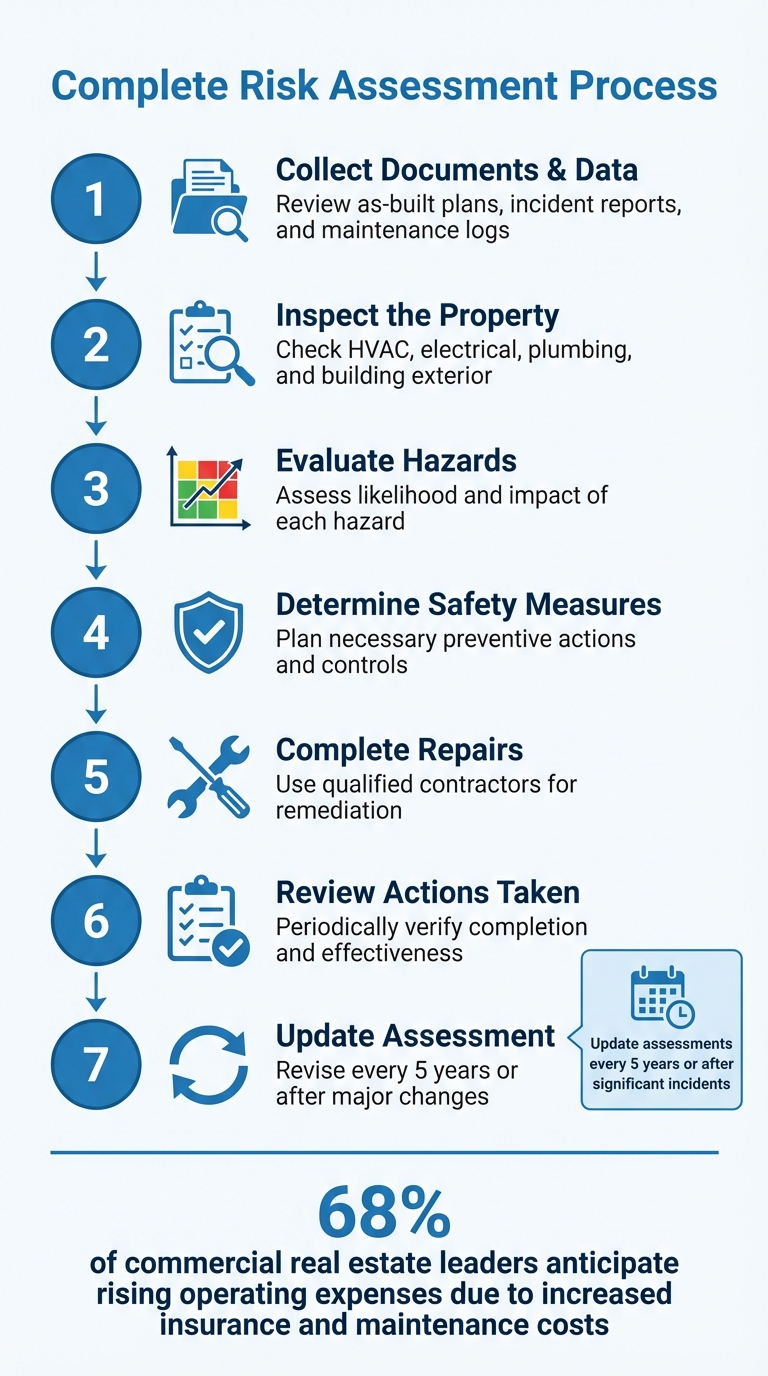
Steps for Performing a Complete Risk Assessment
Follow this seven-step process for a thorough risk assessment:
- Collect relevant documents and historical data.
- Inspect the property for hazards.
- Evaluate each hazard based on likelihood and impact.
- Determine the necessary safety measures.
- Complete repairs using qualified contractors.
- Periodically review actions taken.
- Update the assessment to account for changes.
This framework integrates seamlessly into routine maintenance and emergency planning. A compliance calendar can further ensure that all required inspections are completed on time, helping you avoid penalties and better manage insurance costs. This is especially critical as 68% of commercial real estate leaders anticipate rising operating expenses this year, largely due to increased insurance premiums and maintenance costs.
To stay ahead of potential risks, consider installing environmental sensors in vulnerable areas like basements, mechanical rooms, or server rooms. These sensors provide real-time alerts for moisture, temperature changes, or unusual activity, allowing you to address problems before they escalate. Early detection is especially important in the face of weather-related deterioration.
How to Categorize and Prioritize Risks
Once hazards are identified, organize them by severity and urgency. Start with life-safety issues such as faulty fire alarms, exposed electrical wiring, or structural instability. These require immediate attention - no exceptions. Next, focus on high-cost structural vulnerabilities like roof damage or foundation cracks, which can worsen quickly and lead to significant expenses.
After handling the most critical items, move on to medium-priority risks such as aging HVAC systems or minor plumbing leaks. While these don’t pose immediate threats, addressing them sooner rather than later can save money in the long run. Finally, tackle low-priority items like cosmetic repairs or minor security updates when time and budget allow. This tiered approach ensures that your efforts are focused on what matters most, while also preserving the long-term value of the property.
Revisit and update your risk assessment every five years, or sooner if the property undergoes major changes or experiences a significant incident. With an estimated $1.8 trillion in commercial loans maturing in 2026, maintaining asset value through consistent risk management is more critical than ever. Regular updates also keep you eligible for certain assistance programs and ensure your plans align with current regulations and environmental conditions. These practices are essential for protecting assets and ensuring smooth operations over time.
sbb-itb-c0ea5e9
Setting Up Preventive Maintenance Routines
Start with a thorough inventory of your assets - HVAC systems, plumbing, electrical setups, roofs, and foundations. Gather all relevant documents outlining the lifespan and maintenance needs for each asset. This step lays the groundwork for creating a targeted maintenance schedule. From there, define specific tasks like cleaning HVAC coils, testing water heater pressure relief valves, or inspecting roof shingles. This preparation simplifies both task planning and scheduling.
Plan maintenance around time, usage, and risk. For example, time-based tasks could include seasonal or quarterly activities like cleaning gutters. Usage-based servicing applies to equipment like elevators or gym machines, focusing on their operating hours. Risk-based checks prioritize high-hazard systems, such as electrical wiring or fire suppression units. This structured approach ensures nothing is overlooked. Andrew Smallwood, Chief Strategy Officer at Second Nature, sums it up well:
“Good property managers respond to maintenance issues quickly, but great property managers work to prevent issues from arising in the first place.”
Proactive maintenance is like an early risk assessment - it helps avoid expensive failures and preserves property value. It’s also cost-effective: preventive maintenance can deliver up to 545% ROI, reduce emergency repairs by 30%, and extend asset life by 20%. On the flip side, reactive maintenance can cost three to nine times more. Empowering residents with tools like air filter delivery services or self-guided inspection apps can also cut HVAC-related maintenance tickets by 38%.
Inspection Schedules for High-Risk Areas
Once you’ve documented your assets and outlined tasks, create inspection schedules tailored to high-risk systems. For instance, HVAC systems typically require quarterly filter changes and system checks. Roofs should be inspected twice a year - once in the spring and again in the fall. Plumbing systems benefit from annual leak checks and water heater pressure testing, while electrical panels should undergo an annual infrared scan or visual inspection. Fire safety equipment, including smoke detectors and extinguishers, also needs annual testing. For properties with elevators, monthly or usage-based safety checks and mechanical lubrication are critical. Daily staff walkthroughs can catch early warning signs, and it’s essential to follow manufacturer guidelines to maintain warranties.
Logan Anderson, Director of Strategy & Growth at Re-Leased, emphasizes the importance of preparedness:
“Each dollar invested in preparedness can yield double-digit savings in avoided losses.”
— Logan Anderson, Director of Strategy & Growth at Re-Leased
Predictive Maintenance and Early Repairs
Beyond scheduled maintenance, predictive maintenance uses real-time data to anticipate and prevent failures. By leveraging sensor data and IoT technology, work orders can be triggered as soon as performance deviates, cutting emergency calls by 30–50%. For example, moisture sensors can alert you to potential leaks, while vibration analysis, thermal imaging, and oil sampling can detect issues in mechanical and electrical systems before they escalate.
Scheduling comprehensive HVAC tune-ups just before seasonal peaks - such as heat waves or freezes - can help prevent failures when demand is highest. As equipment ages or approaches the end of its lifespan, increasing inspection frequency and analyzing past emergency incidents can further fine-tune your preventive strategies. A Computerized Maintenance Management System (CMMS) can also simplify the process by automating work orders and tracking maintenance history. Even routine HVAC servicing can yield significant savings, reducing energy bills by 15% to 20%.
Fire Safety and Water Damage Prevention
When it comes to protecting your property, fire and water damage prevention is just as critical as conducting risk assessments and staying on top of maintenance. These hazards can be incredibly expensive. In 2024 alone, the United States faced 27 weather and climate disasters, each causing damages of $1 billion or more. Fires and floods don’t just harm buildings - they can create chain-reaction failures, impacting systems and structures alike. To tackle these risks, you need reliable detection systems, durable building envelopes, and well-maintained drainage infrastructure.
Let’s dive into key areas to focus on: fire safety systems and waterproofing measures.
Fire Safety Systems and Evacuation Planning
Fire alarms, smoke detectors, and suppression systems are your first line of defense. To keep them reliable, test these systems annually. This includes ensuring alarm triggers work and notification lists are accurate. Drills are equally important - they help everyone practice emergency responses. As Nick Thornton, Head of Operational Resilience for Global Banking at J.P. Morgan, wisely notes:
“You can't practice in the middle of an incident.”
— Nick Thornton, Head of Operational Resilience for Global Banking at J.P. Morgan
In addition to detection systems, effective communication tools are a must-have. Keep call trees and notification systems updated so you can alert staff and residents quickly. Communication during emergencies should be straightforward - tenants need to know where to go, while staff should have clear instructions on their roles. Regularly verify contact lists, ensuring phone numbers and emails are current. Backup power systems, like on-site generators, are also essential to keep these safety systems operational during outages.
Water damage can also impact fire safety. Protect electrical systems by elevating panels and HVAC equipment, and seal any wall openings to block water infiltration. After drills or actual emergencies, take time to review and improve your emergency plans.
Waterproofing and Drainage Maintenance
Your drainage system is the first line of defense against water damage. Regularly inspect culverts, channels, and stormwater basins to make sure they’re free of debris and can handle heavy water flow. When drainage systems fail, flooding and erosion can happen fast. Stabilizing embankments and road shoulders near your property is also critical - this helps prevent washouts that could block evacuation routes or weaken building structures during floods.
Routine inspections of roofs and building envelopes are just as important. Sealing wall openings can stop wind-driven rain and floodwaters from reaching electrical systems and HVAC equipment. Additionally, rehabilitating water control facilities like basins and reservoirs can help manage erosion and prevent downstream flooding or contamination. After severe weather, restoring essential services - such as water, power, heat, and internet - should be a top priority since tenants rely on them for safety.
Together, these steps form a strong foundation for your emergency response and hazard mitigation plans.
Creating Emergency Response and Evacuation Plans
Once you've tackled risk assessments and preventive maintenance, the next step is to craft a clear emergency response plan. This ensures that when something does go wrong, your team knows exactly how to handle it. Fire safety systems and waterproofing measures are great, but they're not enough without a detailed, actionable plan for your staff and tenants. A good emergency response plan should address the specific hazards your property faces, whether that's flooding, wildfires, hurricanes, or internal issues like aging electrical systems. It should also outline how everyone should respond in these situations.
Focus on maintaining essential services like water, heat, power, and internet. These are critical not only for tenant safety but also for ensuring operational continuity - especially for residents who work from home or rely on smart building technology. Nick Thornton, Head of Operational Resilience for Global Banking at J.P. Morgan, emphasizes this point:
“This approach can help you identify alternative ways to provide those [essential services] in the event of disruption and manage your resources so you're focused on the most critical services to get back up and running.”
— Nick Thornton, Head of Operational Resilience for Global Banking at J.P. Morgan
Your plan should also include clear communication protocols. Keep updated contact lists, establish call trees, and define roles for staff, tenants, and contractors. Don’t forget to account for vulnerabilities tied to third-party providers, such as utility companies or maintenance contractors your property relies on.
Finally, create a property-specific plan that addresses the unique risks your building faces and the protocols needed to respond effectively.
Developing a Property-Specific Emergency Plan
Start by using your earlier risk assessments to identify hazards that will shape your emergency response procedures. Map out critical shut-off points for water, gas, and electricity so staff can quickly access them during an emergency.
Collaborate with local emergency services like fire departments, police, and disaster management agencies. Make sure your plan aligns with local evacuation orders and disaster response guidelines. This is especially important if your property includes vulnerable residents, such as elderly individuals or families with young children.
For communication, use straightforward and consistent notification templates tailored to different scenarios - whether it's a fire drill, power outage, or severe weather alert. Nick Thornton advises:
“Start with the audience and what they need to hear, and don't overcomplicate it.”
— Nick Thornton
Regular drills and after-action reviews are key to refining your plan. Test your call trees and notification systems every three months to catch any gaps and ensure the technology works when it’s needed. Schedule drills during normal business hours, not just during low-traffic times, to better simulate real-world conditions. As Thornton points out:
“You can't practice in the middle of an incident.”
— Nick Thornton
After each drill or real emergency, conduct a thorough review to identify areas for improvement. Update your plan based on these findings. For example, FEMA requires local and state governments to revise their hazard mitigation plans every five years to stay eligible for non-emergency disaster aid.
Once your plan is ready, the next step is ensuring tenants and staff are prepared to implement it.
Training Tenants and Staff for Emergencies
Even the most well-thought-out emergency plan will fail if tenants and staff aren’t trained to carry it out. Training should start with your emergency communications team and property leaders, then expand to include everyone on-site through property-wide drills. It's important that everyone understands why notifications are sent, who sends them, and what actions they need to take.
Testing and simulations are both crucial. Testing ensures that systems like call trees and notification software function properly, while simulations bring staff and tenants together to practice their responses to specific events, such as fires or power outages. Simulations are particularly useful for seeing how well your team performs under pressure.
When training tenants, keep things simple and clear. Share information about evacuation routes, shelter-in-place plans, and emergency contact numbers. Use multilingual messaging and accessibility features, like text-to-speech or visual alerts, to ensure instructions are understandable for everyone. Recent data shows that 60% of U.S. employees want clear, actionable instructions during a crisis, and 56% prioritize timely updates as events unfold.
Two-way communication is another essential piece of the puzzle. Your training should include systems that allow property managers to account for everyone’s safety and gather real-time information from those directly affected. As Ron Derrick, Corporate Senior Emergency Manager at Whataburger, explains:
“The way we control chaos during an emergency is through communication.”
— Ron Derrick, Corporate Senior Emergency Manager at Whataburger
After every drill or emergency, conduct a detailed review to pinpoint lessons learned and address any failures. This ongoing improvement process ensures your team stays ready, and your plan evolves to meet the changing needs of your property and its occupants.
Building Reliable Networks for Hazard Mitigation
When it comes to hazard mitigation, having a dependable network of service providers is crucial. Your emergency response plan is only as effective as the team executing it. Imagine a burst pipe at 2:00 AM or an HVAC breakdown during a heatwave - these are moments when you need vendors who act fast and get it right. But it’s not just about having a list of contacts. It’s about building relationships with professionals who grasp the urgency and nuances of managing occupied properties.
Here’s a compelling fact: every dollar spent on preparedness can lead to significant savings in avoided losses, while well-executed preventive maintenance can cut emergency service calls by 30–50%. Reliable vendors don’t just respond to emergencies - they help stop them from happening in the first place. Building and maintaining these relationships is a cornerstone of any effective hazard mitigation strategy.
Choosing a Trusted Repair and Maintenance Partner
Selecting the right partner goes beyond qualifications - it’s about ensuring they meet your needs when it matters most. Here’s what to look for:
- Proper Licensing and Insurance: The partner should carry valid licenses and comprehensive insurance, including general liability (typically $1 million or more), workers' compensation, and commercial auto insurance. Always ensure they list you as an "additional insured" to reduce liability.
- True 24/7 Availability: A simple answering service isn’t enough. You need a partner who guarantees after-hours coverage and has a clear escalation process for emergencies.
- Defined Service Level Agreements (SLAs): These agreements should outline specific response times. For critical situations like flooding or gas leaks, expect an on-site response within two hours, with escalation protocols if the call isn’t acknowledged within 30 minutes.
- Detailed Documentation: Vendors should provide timestamped photos, itemized damage lists, and repair estimates - essential for insurance claims and regulatory compliance. Many modern providers now use digital tools like IoT sensors to enhance accuracy and efficiency.
- Financial Stability: Check references, bonding capacity, and credit history to ensure the provider can support your long-term needs. The facility maintenance industry is projected to grow significantly, but not all vendors have the resources to keep up.
A great example of a trusted partner is J National, which specializes in emergency repair and renovation for multifamily and commercial properties. With over 25 years of experience, they offer 24/7 support across plumbing, electrical, HVAC, and renovations, ensuring high-quality work and clear communication.
Diversifying your network is equally important. Avoid relying on a single vendor for critical trades like plumbing, electrical, HVAC, and roofing. Keep primary and backup providers for each trade, and meet with them quarterly to review performance, update protocols, and verify licenses and insurance.
Coordinating Insurance and Repair Services
A reliable repair partner does more than fix problems - they simplify the insurance claims process, saving time and reducing stress. After an incident, the clock starts ticking. Most insurance carriers require a "proof of loss" package within 30 days. Experienced vendors know this and document everything, from mitigation steps to maintenance history, to ensure claims are processed smoothly.
For example, using 3D digital documentation to capture your property’s condition before a disaster can speed up insurance adjustments. This pre-loss inventory provides a clear baseline, simplifying negotiations and helping secure faster payouts.
The best providers also coordinate directly with insurance adjusters, streamlining communication between trades and insurers. This minimizes downtime, tenant displacement, and operational headaches. Considering that 77% of industry leaders cite "value for money" as a top priority for facility management decisions by 2025, this level of service is critical.
To avoid chaos during claims, establish clear communication protocols with your vendors. Define roles, decision-making authority, and spending limits in advance. A notification matrix can outline who needs to be contacted for specific incidents, what information they require, and the necessary timelines.
Conclusion
Hazard mitigation is all about staying ahead of the curve - acting before disaster strikes. As Nick Thornton, Head of Operational Resilience for Global Banking at J.P. Morgan, wisely points out:
“You can't practice in the middle of an incident.”
— Nick Thornton, Head of Operational Resilience for Global Banking at J.P. Morgan
The time to prepare is now - before storms, fires, or equipment failures threaten safety and stability. And with risks on the rise, proactive measures are more essential than ever.
At its core, effective hazard mitigation relies on three pillars: advance planning, regular maintenance, and reliable partnerships. Risk assessments help pinpoint weak spots before they escalate into emergencies. Preventive maintenance programs, for instance, can slash emergency calls by 30–50% while delivering up to 4x ROI and reducing overall costs by 12–18%. These numbers translate into fewer disruptions, minimized tenant displacement, and steadier operating expenses.
The strategies outlined in this guide - from identifying risks early to coordinating efficient repair services - offer a solid blueprint for protecting property value and ensuring tenant safety. These principles align seamlessly with proactive maintenance and emergency planning, creating a comprehensive approach to resilience.
Every dollar invested in preparedness pays off significantly. That’s why dependable partnerships are non-negotiable. Pre-vetted contractors with strict Service Level Agreements eliminate last-minute chaos when unexpected issues arise - whether it’s a burst pipe or an HVAC failure during a heatwave. Companies like J National, with over 25 years of experience in multifamily and commercial properties, provide round-the-clock emergency response and the documentation support needed to keep properties running smoothly and insurance claims on track.
FAQs
How often should property managers update risk assessments to ensure effective hazard mitigation?
Risk assessments need frequent updates to remain relevant and account for changing conditions. It’s wise to revisit them whenever there are major shifts - like new developments, newly identified risks, or changes in property vulnerabilities. Regular reviews, such as on an annual basis or following an incident, are also essential for keeping your mitigation strategies effective and aligned with current realities.
What are the essential components of an effective emergency response plan for property managers?
An emergency response plan for property managers needs a few key elements to ensure a swift and organized reaction during crises. Start with a detailed risk assessment to pinpoint potential threats like natural disasters, power outages, or security risks. This allows you to tailor the plan to address the specific challenges your property might face.
From there, set up clear procedures and defined roles for your team. This includes communication strategies and resource allocation plans to keep everything running smoothly under pressure. Regular training sessions and practice drills are also crucial so that everyone knows exactly what to do when an emergency strikes.
Make resident safety a top priority, along with maintaining operations to reduce disruptions - this is especially critical for multifamily or commercial properties. Partnering with local emergency services and staying compliant with all relevant laws and guidelines adds another layer of preparedness, ensuring you can protect both your property and the people in it.
What steps can property managers take to build a reliable vendor network for hazard mitigation?
To create a dependable vendor network for hazard mitigation, property managers should focus on partnering with qualified vendors who follow recognized safety and quality standards. Establishing clear service agreements is essential, as is maintaining relationships with backup vendors to ensure 24/7 coverage for emergencies.
Consistently evaluating vendor performance helps ensure they continue to meet expectations and stay reliable. Open communication and well-defined emergency response protocols are equally important for reducing risks and enabling quick action when issues arise. A carefully managed vendor network plays a crucial role in protecting properties and ensuring the well-being of residents and tenants.